Dr. Keith C. Ferdinand
Professor of Medicine
Tulane University School of Medicine


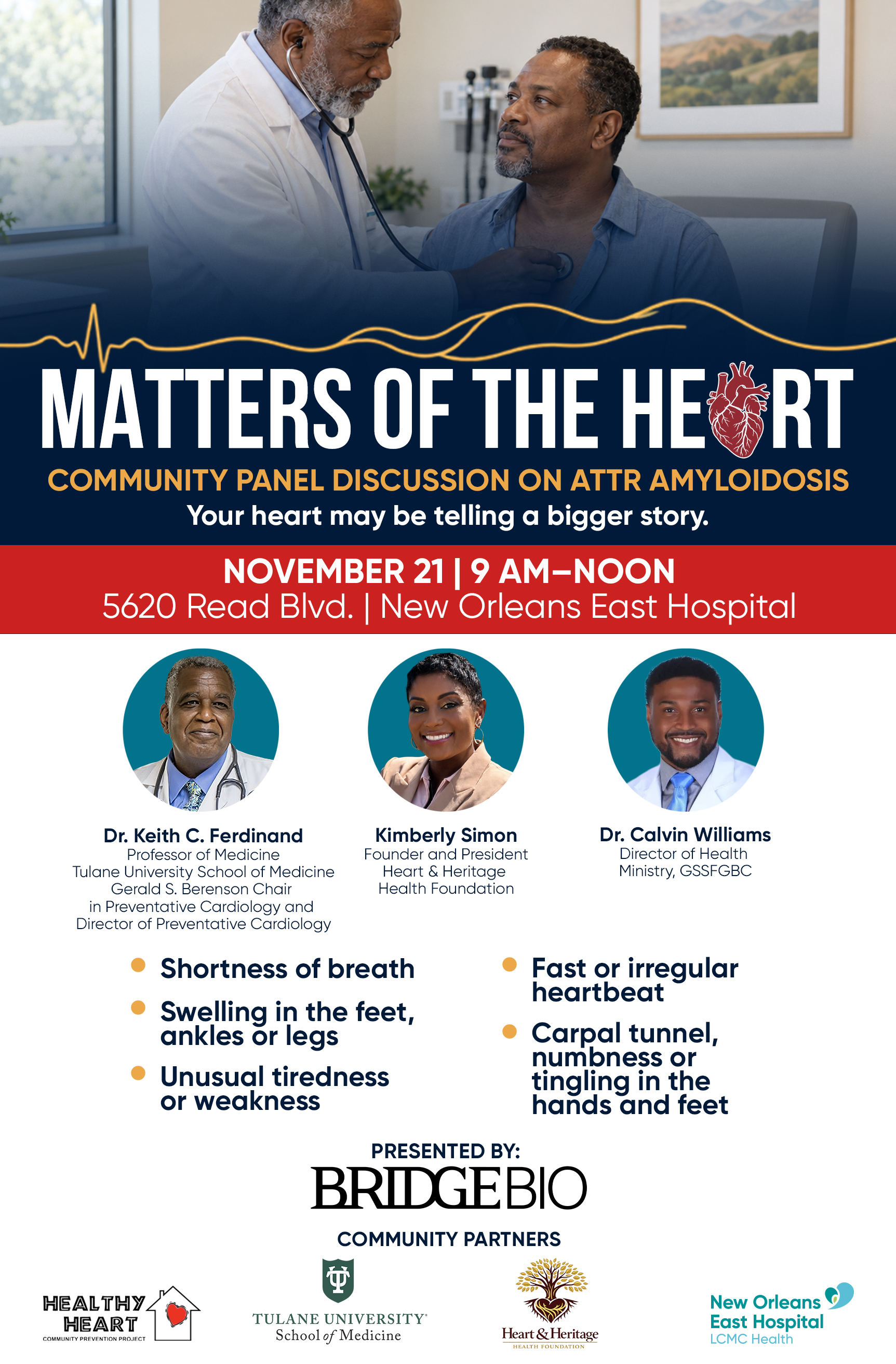
You’re invited
Cardiac Amyloidosis
Join Dr. Keith C. Ferdinand, Kimberly Simon, Dr. Calvin Williams and more to learn about a lesser-known heart disease impacting the African American community.
In ATTR-CM, a protein builds up in the heart, making it stiff and harder to pump blood.
By invitation only
Save the date
November 21
9 AM–noon
Join us at
New Orleans East Hospital
5620 Read Blvd.
Learn together
Professor of Medicine
Tulane University School of Medicine

Founder and President
Heart & Heritage
Health Foundation

Director of Health
Ministry, GSSEGBC
What to expect
A conversation about cardiac amyloidosis (ATTR-CM).
Hear their experiences in their own words.
Information to help patients and caregivers speak up for their needs.
Learn together and take the conversation back to your community.
Make a difference
Help our community better understand and manage cardiac amyloidosis.
Questions & answers
Common questions about transthyretin amyloid cardiomyopathy and what it means for our community.
ATTR amyloidosis happens when a protein called transthyretin folds incorrectly and builds up in the body. These deposits can affect the heart, nerves, and other tissues.
ATTR-CM is the form that affects the heart muscle. Protein buildup can make the heart stiff, making it harder to fill with blood and pump effectively. American Heart Association ↗
Possible symptoms include shortness of breath, unusual tiredness, swelling in the feet or legs, and an irregular heartbeat. Carpal tunnel syndrome or numbness and tingling can also be clues. These symptoms have many possible causes and do not automatically mean someone has ATTR-CM.
No. Hereditary ATTR is linked to a gene change that can pass from parent to child. Another form, called wild-type ATTR, is not inherited and usually develops in older adults.
A gene change associated with hereditary ATTR is more common among people with African ancestry. Having that gene change does not mean someone will definitely develop the disease. ATTR can affect people of any racial or ethnic background. Mayo Clinic ↗
Diagnosis may involve heart imaging, blood and urine tests, and a specialized heart scan. Sometimes a tissue biopsy is needed. Doctors must distinguish ATTR from other types of amyloidosis because treatments differ.
Yes. Treatments can slow disease progression and help manage symptoms. Although there is no single treatment that cures ATTR-CM or reverses all heart damage, recognizing it earlier can help people receive appropriate care sooner. Mayo Clinic ↗
Talk with your healthcare provider about genetic counseling and whether testing is appropriate. A genetic counselor can explain your family's risk, what test results mean, and possible next steps. American Heart Association ↗
By invitation only